
Product Carbon Footprint (PCF) Training in Malaysia equips professionals with the knowledge and practical skills required to quantify, assess and report greenhouse gas (GHG) emissions associated with products throughout their life cycle, based on ISO 14067:2018.
OPTIMISE offers comprehensive Product Carbon Footprint Training designed to help organisations understand product-level carbon accounting, respond to increasing sustainability requirements and improve the accuracy of carbon footprint assessments across their value chains.
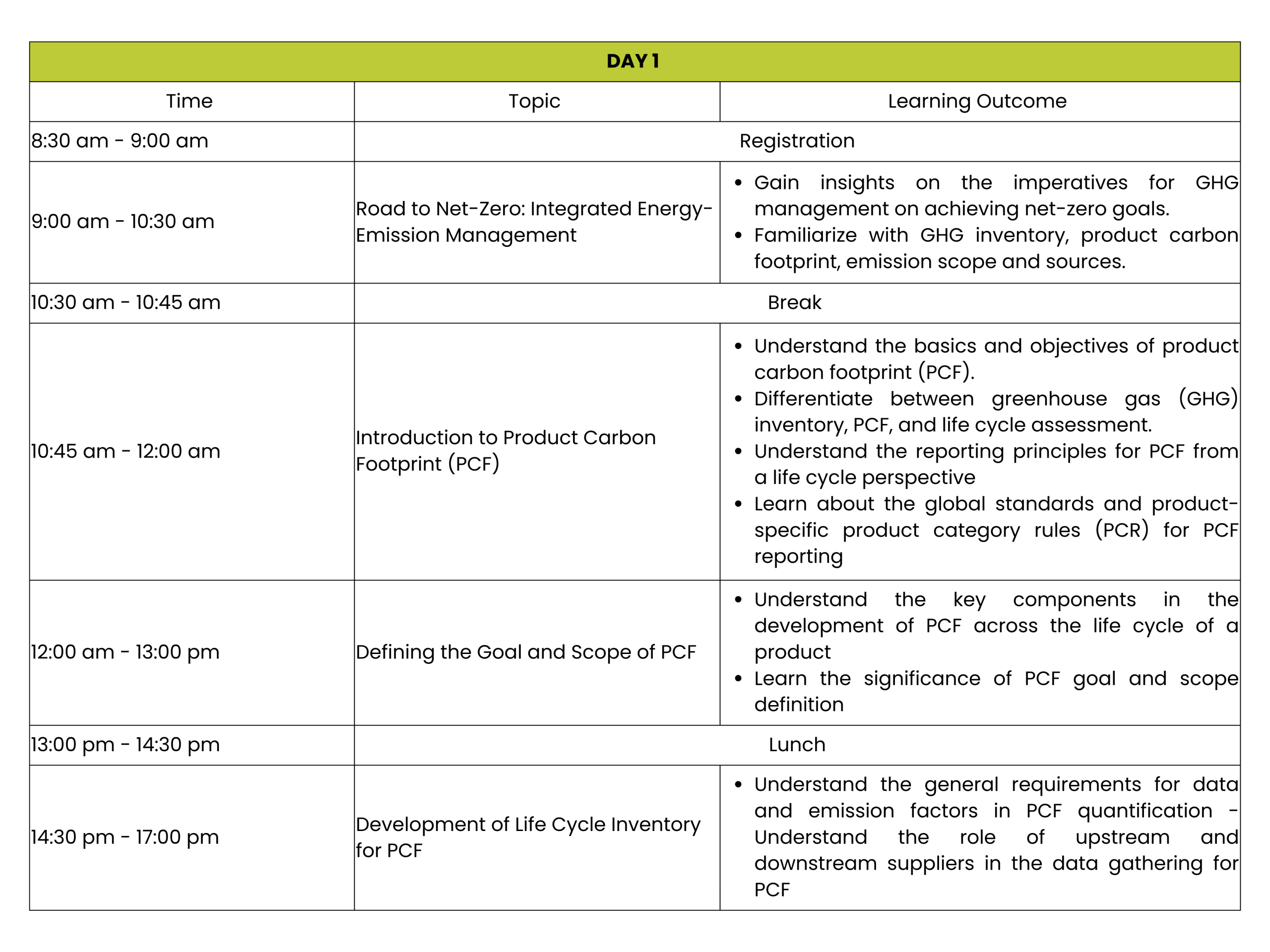
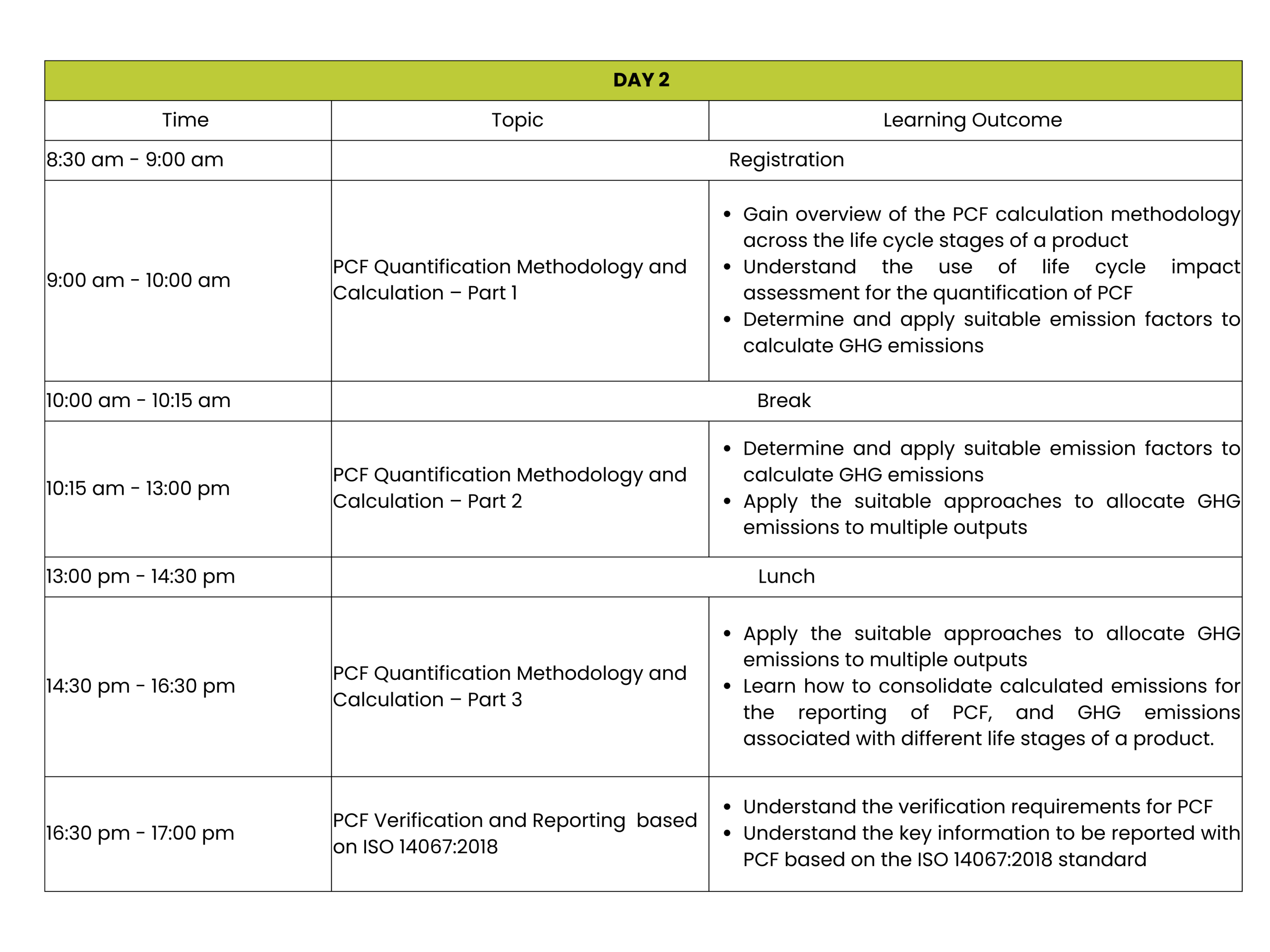
This training covers the principles of Product Carbon Footprint (PCF) assessment and Life Cycle Assessment (LCA), including defining goals and scope, establishing system boundaries, developing Life Cycle Inventories (LCI), collecting activity data, selecting appropriate emission factors and quantifying life cycle greenhouse gas emissions.
Through practical case studies and interactive calculation exercises, participants will learn how to calculate product carbon footprints, allocate emissions from multi-output processes, consolidate GHG emissions across product life cycle stages and understand PCF verification and reporting requirements in accordance with ISO 14067:2018.
The programme also introduces the relationship between corporate GHG inventories and product-level carbon footprints, highlighting how PCF assessments support supply chain engagement, environmental reporting and organisational decarbonisation initiatives.
This Product Carbon Footprint Training is suitable for sustainability managers, environmental professionals, engineers, consultants, production personnel and individuals involved in carbon accounting, Life Cycle Assessment, product sustainability reporting and greenhouse gas emissions management.
By completing this programme, participants will gain practical knowledge of Product Carbon Footprint calculation methodologies and a stronger understanding of how to measure, report and identify opportunities to reduce product-related greenhouse gas emissions.