 Share
Share
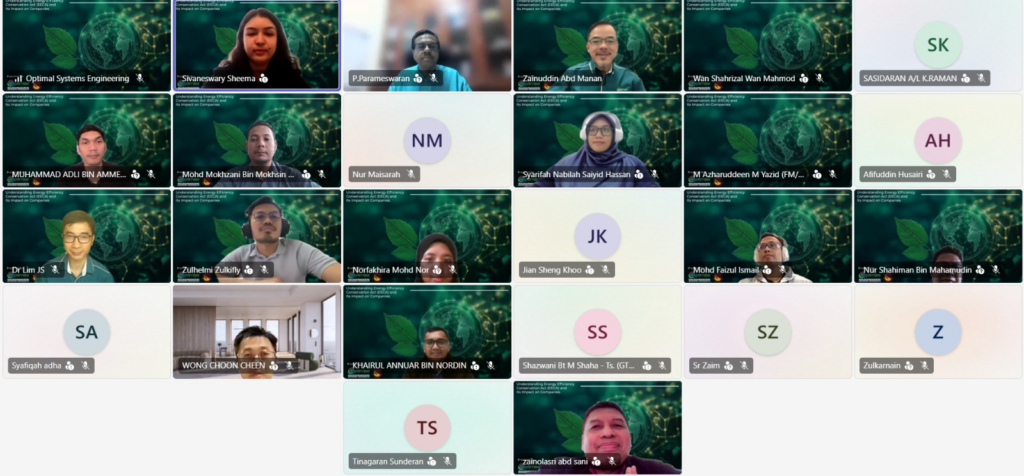
In response to the evolving regulatory landscape in Malaysia, Optimal Systems Engineering (OPTIMISE) successfully conducted its online workshop on “Understanding the Energy Efficiency and Conservation Act (EECA) and Its Impact on Organisations” on 17 March 2026 via Microsoft Teams.
The full-day session brought together energy professionals, facility managers, compliance officers, and future energy practitioners to deepen their understanding of the EECA 2024 framework and its implications for businesses across industries.
Building a Strong Foundation in EECA Compliance
The workshop was designed to provide participants with a comprehensive and practical understanding of the Energy Efficiency and Conservation Act (EECA) 2024. Participants explored key regulatory requirements, compliance obligations, and actionable strategies to align their organisations with national energy efficiency goals.
Through structured modules, the session covered:
- Key provisions of EECA 2024 and regulatory expectations
- Guidelines for energy consumers and building stakeholders
- Roles and responsibilities of Registered Energy Managers (REM)
- Energy reporting, audit requirements, and Energy Management Systems (EnMS)
The programme emphasised real-world application, enabling participants to translate regulatory knowledge into actionable steps within their organisations.
Insights from Industry Experts
The workshop featured renowned experts from OPTIMISE, including leading practitioners and contributors to Malaysia’s energy policy development. Their extensive industry and academic experience ensured that participants gained first-hand insights into EECA implementation, compliance strategies, and best practices.
Interactive discussions, case-based explanations, and live Q&A sessions further enhanced the learning experience, allowing participants to clarify complex topics and engage directly with experts.
Driving Clarity and Confidence in EECA Implementation
A key highlight of the workshop was its focus on simplifying complex regulatory requirements. Participants gained clarity on critical aspects such as:
- The distinction between REM Type 1 and Type 2
- Building Energy Intensity (BEI) labelling requirements
- Compliance timelines and organisational responsibilities
This clarity is essential as organisations prepare to meet the mandatory requirements under EECA 2024.
Positive Participant Feedback
The workshop received strong feedback from participants, reflecting its relevance and practical value:
“The session was highly interactive and provided much-needed clarity on the EECA 2024 requirements. Specifically, the distinction between REM Type 1 and Type 2 and the clarification on BEI labeling for office buildings were very helpful. I now have a better understanding of the compliance timelines and the mandatory role of Registered Energy Managers in our organization.”
“Very informative and clarified all my doubts on EECA, while assisting me to set up the next action plan.”
Enabling Organisations Towards Sustainable Energy Management
As Malaysia advances towards a more sustainable and energy-efficient future, workshops like this play a crucial role in equipping organisations with the knowledge, tools, and confidence needed to comply with EECA 2024. OPTIMISE remains committed to supporting industries through high-impact training, consultancy, and practical solutions in energy management, sustainability, and resource optimisation.